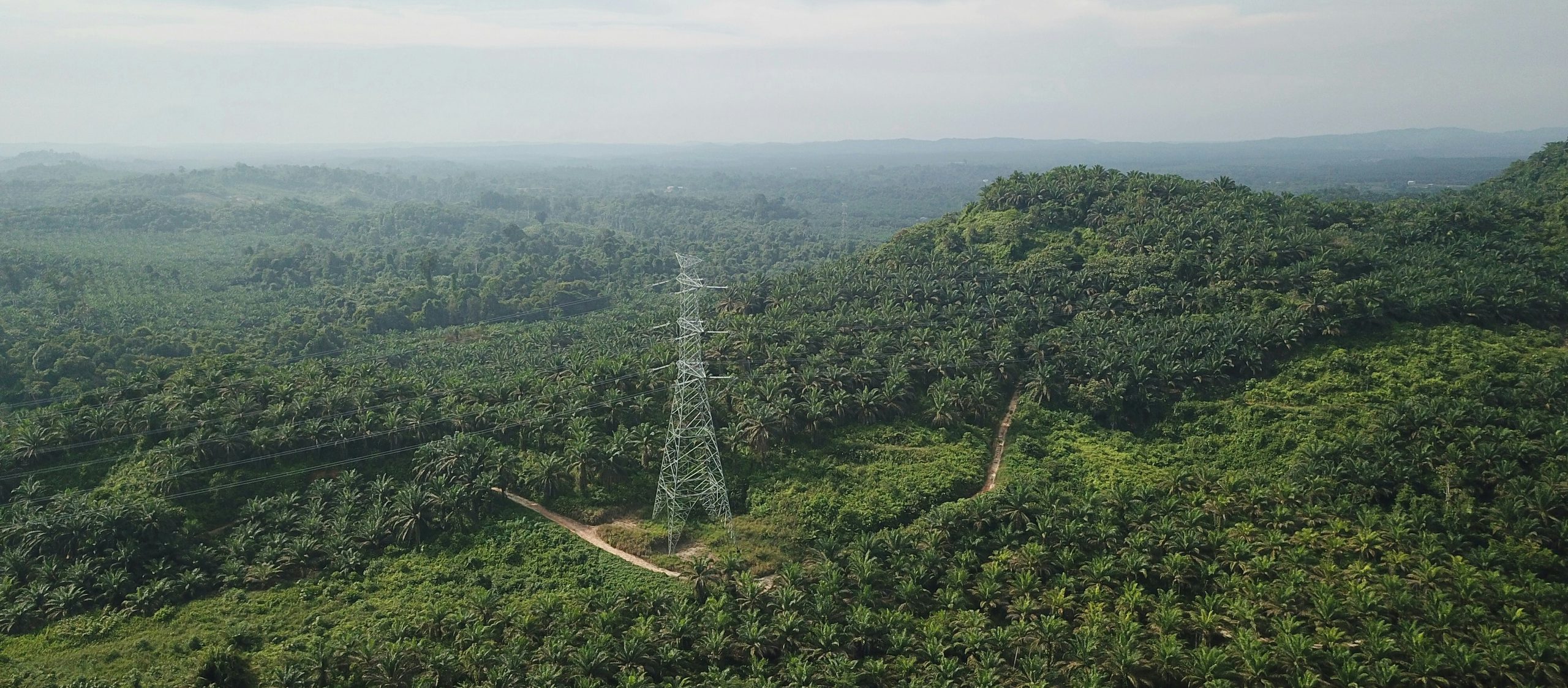
If you’ve ever glanced through the ingredients that go into packaged foods or household products, chances are that palm oil was on the list. This near-ubiquitous product crops up in a lot of everyday items. Things like plant-based spreads, chocolate bars and cakes are the obvious places to look for palm oil, but you’ll also find it in lipsticks, shampoos and kitchen cleaners.
Palm oil is something of a wonder product, which is why it’s so widely used. It’s solid but not hard at room temperature, so it makes cosmetics smooth and allows margarines to hold their shape while remaining spreadable. As it’s odourless, colourless and can be heated to high temperatures without breaking down, palm oil is ideal for cooking. Manufacturers of processed foods appreciate it because it’s stable and resists oxidation, which increases the shelf-life of packaged goods. In personal, domestic or industrial cleaning products, palm oil acts as an emulsifier or foaming agent to boost efficiency.
But what exactly is palm oil?
Globally, palm oil is the most commonly used of all vegetable oils. It’s made from the date-like fruits of Elaeis guineensis, the African oil palm. Crude palm oil comes from the fleshy part of the palm fruit and is most abundant. Its high energy content means that, as well as featuring in the human food chain, it can also be used for animal feed and as biofuel. Kernel palm oil, derived from the fruit’s stone, is produced in lower volumes but is prized for its antimicrobial properties. That’s why you’ll find it in soaps and detergents.
The usefulness of palm oil generates high demand. Conveniently, it’s easy to grow and produces far higher yields than alternative vegetable sources. Around 60% of the world’s palm oil supply comes from Indonesia and around 25% is from Malaysia, with the island of Borneo (which is shared between Indonesia, Malaysia and Brunei) contributing substantially. The remainder comes from Thailand, Colombia and Nigeria.
So what’s the problem?
Unfortunately, in recent decades, it has become increasingly clear that palm oil production is environmentally disastrous. According to ZSL, in 1970, palm oil plantations occupied 3.3 million hectares of land. By 2020, that figure had risen to 28.7 million hectares. To free up that extra land in equatorial countries, rainforests and peat bogs have been cleared and drained, taking unique habitats with them.
A report published in Nature in 2016 identified new plantations as the primary cause of rapid deforestation in Borneo over the last 40 years. ZSL offers up some stark statistics – 193 at-risk species, including birds and mammals, are directly threatened by the palm oil industry. Populations of animals such as Sumatran tigers and orangutans struggle to survive in smaller and smaller areas, with limited food sources and high competition. When areas of forest are isolated among tracts of cultivated land, it prevents animals from seeking mates in the wider area. Ultimately, this leads to inbreeding and restricts the gene pool.
While pushing wildlife to the brink, deforestation also contributes enormously to greenhouse gas emissions. When forests are cleared, carbon, which would otherwise be held in peat soils and trees, is released into the atmosphere. Only the burning of fossil fuels releases more.
There’s a human cost to palm oil production, too. Unscrupulous businesses use intimidation and exploitative labour practices. Production can force local communities off land their ancestors have occupied for generations. Even where land rights are retained, clearing and reshaping surrounding terrain may result in pollution, flooding or drought. Uncontrolled fires are the frequent result of clearing forests through burning.
Should we all just boycott palm oil?
We could, but the story’s complicated. Despite all the drawbacks, palm oil benefits locals too – many people find legitimate employment in the industry and significant numbers of smallholders depend on growing oil palms to earn a regular income. Plus, to replace high-yielding palm oil with lower-yielding alternatives such as soybean or coconut would require the use of anywhere up to ten times as much land. So that’s not a solution.
Bodies including the Roundtable on Sustainable Palm Oil (RSPO) believe that regulation, strict standards and considered approaches to planting can make palm oil sustainable and halt deforestation. That might mean growing oil palms alongside other flowers and plants to encourage biodiversity. It could involve preserving linked areas of rainforest within cultivated zones to let animals such as elephants and orangutans move between forested areas to feed and find breeding partners.
RSPO runs a certification scheme for palm oil that’s produced sustainably, without deforestation and using fair employment practices. In 2012, the British government committed to making 100% of palm oil used in the UK sustainable. Estimates suggest we’re at about 70% so far. To do your bit, choose products bearing the RSPO logo and use the WWF Palm Oil Scorecard to see how the UK’s manufacturers and retailers are shaping up.
At STC Expeditions, we devise travel itineraries that allow students to experience real-world issues first-hand. Our Borneo trips include visits to rainforests, conservation projects and palm oil plantations to offer a balanced insight into the environmental cost and economic drivers behind palm oil production.